What industries are mixed ion exchangers mainly used in
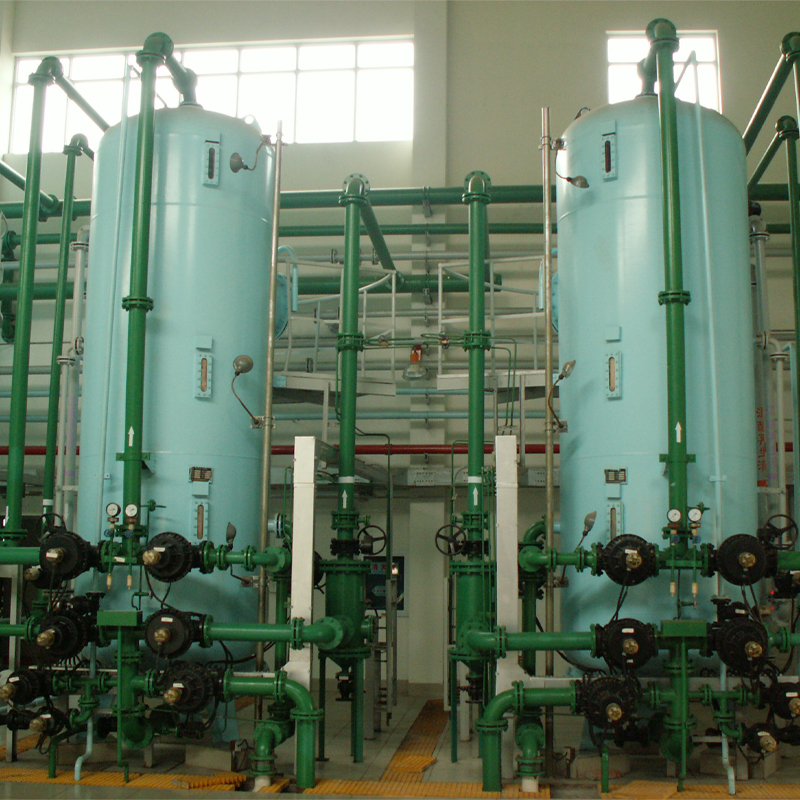
A mixed ion exchanger is a device that removes ion impurities from water through cation anion exchange resin. With its efficient desalination ability and water purification effect, it is widely used in multiple industries that require high water quality. The following are specific application scenarios:
1. Power industry
Boiler feedwater treatment: Power plant boilers require high-purity
A mixed ion exchanger is a device that removes ion impurities from water through cation anion exchange resin. With its efficient desalination ability and water purification effect, it is widely used in multiple industries that require high water quality. The following are specific application scenarios:
1. Power industry
Boiler feedwater treatment: Power plant boilers require high-purity water (such as desalinated water) to prevent scaling and corrosion. The mixed ion exchanger can remove calcium, magnesium, sodium, sulfate ions, chloride ions, etc. from water, ensuring that the conductivity, pH value, and other indicators of boiler water meet the requirements and guaranteeing the safe operation of the boiler.
Steam turbine circulating water purification: Deeply treat the circulating cooling water to reduce the ion content in the water, lower the risk of equipment scaling, and improve heat exchange efficiency.
2. Electronic industry
Semiconductor manufacturing: In the production process of semiconductor products such as chips and integrated circuits, processes such as cleaning and etching require the use of ultrapure water (with a resistivity typically ≥ 18M Ω· cm). The mixed ion exchanger can be used as a key step in the preparation of ultrapure water, removing trace ions from the water and avoiding the influence of impurities on the performance of semiconductor components.
Display panel production: The production of liquid crystal displays (LCDs) and semiconductor display devices requires high-purity water to prevent ion residue from causing screen defects or circuit short circuits.
3. Pharmaceutical industry
Preparation of injection water: Injection water and purified water that meet pharmacopoeia standards are the basic raw materials for pharmaceuticals. The mixed ion exchanger can remove electrolytes from the water, and when combined with other water treatment processes such as reverse osmosis and distillation, it ensures that the water quality meets GMP (Good Manufacturing Practice) requirements.
Raw material production: In the synthesis, crystallization and other processes of raw materials, the use of high-purity water can avoid the influence of ion impurities on the reaction process or product purity.
4. Chemical industry
Chemical industry: The production of chemical products such as pesticides, dyes, and coatings requires high water quality for solvents and reaction media. Mixed ion exchangers can remove ions from water and prevent impurities from affecting product performance and stability.
Purification of chemical raw materials: such as purifying solvents such as methanol and ethanol, or treating reaction water in polymer material production to reduce ion interference in polymerization reactions.
5. Food and beverage industry
Purified water production: During the preparation process of bottled water and bottled water, a mixed ion exchanger can remove minerals and ions from the water, making the water quality meet drinking water standards while improving the taste.
Beverage processing: In the production of fruit juice, carbonated beverages, etc., the use of softened water or desalinated water can avoid precipitation caused by calcium and magnesium ions, ensuring product transparency and shelf life.
6. Metallurgical industry
Metal surface treatment: In processes such as electroplating and anodizing, high-purity water is required to clean the metal surface to prevent uneven or corrosive coating caused by residual ions in the water. A mixed ion exchanger can effectively purify the cleaning water.
Wet metallurgy: In the extraction process of rare metals such as nickel and cobalt, process water is used to reduce the influence of impurity ions on extraction, electrolysis, and other processes.
7. Research and Laboratory
Preparation of laboratory ultrapure water: Chemical analysis and biological experiments (such as PCR and cell culture) in universities and research institutions require the use of ultrapure water. The mixed ion exchanger can serve as the core component of the ultrapure water system, providing water with low ion content.
Water used for precision instruments, such as mass spectrometers and high-performance liquid chromatography (HPLC) instruments, needs to undergo ion exchange treatment to avoid instrument pipeline blockage or detection errors.
8. Environmental Protection Industry
Wastewater treatment and reuse: When deeply treating industrial wastewater (such as electroplating wastewater, printing and dyeing wastewater), a mixed ion exchanger can remove heavy metal ions, inorganic salts, etc. from the water, making the wastewater meet reuse standards and achieving water resource recycling.
Post treatment of seawater desalination: After seawater is desalinated by reverse osmosis, a small amount of residual ions can be further removed through a mixed ion exchanger to improve freshwater quality.
9. Other application scenarios
Cosmetics production: The production water for skincare products, shampoo, and other products needs to have low ion content to prevent calcium and magnesium ions from reacting with surfactants to form precipitates, which can affect product stability.
In the battery industry, processes such as lithium battery electrolyte preparation and lead-acid battery plate cleaning require the use of high-purity water to avoid ion impurities affecting battery performance and lifespan.


 WeChat number:WEIXINHAOMA


 Home
Home
 Product
 Wechat
 Telephone